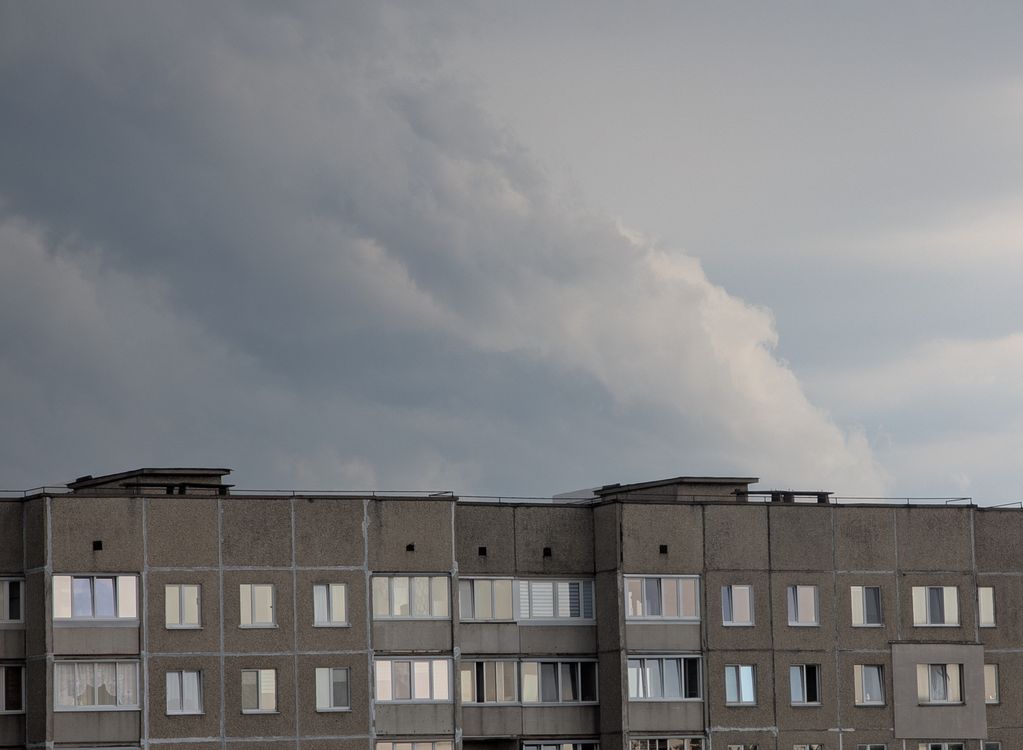

Photo by Darya Sannikova via Pexels
In short: Some standing water on a flat roof right after a heavy storm is normal — flat roofs drain slowly by design. The dividing line the roofing industry uses is about 48 hours: water that is still standing two full days after the rain ended is ponding, and ponding is a problem. Clear your drains and debris first, document what you see, and call a professional if the water persists, the deck looks like it is sagging, or anything is leaking inside.
What exactly counts as ponding water on a flat roof?
Despite the name, no flat roof is perfectly flat. Commercial roofs are built with a slight slope — industry guidance calls for at least a quarter inch of slope per foot of run — so water flows toward drains, scuppers, or the roof edge. In practice, though, low spots form over time: the structure settles, insulation compresses, and debris collects. When water sits in those low spots instead of draining, that is ponding.
The working definition the industry uses is time-based. The Asphalt Roofing Manufacturers Association, joined by the National Roofing Contractors Association and other industry groups, defines ponding water as water that remains on a roof 48 hours or longer after rainfall. That gives you a practical test: after a storm, check the roof. If standing water is gone within a day or two, the roof is doing its job. If it is still there on day three, you have ponding — and ponding deserves attention even if nothing is leaking yet.
One more nuance: shallow puddles near a drain right after a downpour are not ponding; they are the drain catching up. Ponding is the water that never leaves.
Why is standing water dangerous for a commercial roof?
Water is patient and heavy. Left alone, standing water attacks a roof in several ways at once:
- Added load. Water weighs over five pounds per gallon, and a wide, shallow pond across a roof adds up to real tonnage. That load can cause the roof deck to deflect downward — which deepens the low spot, which holds more water. Engineers call this ponding instability, and it is the reason a "harmless puddle" can slowly turn into a structural concern.
- Membrane and insulation damage. Constant moisture accelerates aging of the roof surface. Ice that forms in a pond in winter can scrub the membrane as it shifts with temperature changes. Wet insulation loses its insulating value and can damage the deck beneath it — rusting steel decks, rotting wood decks, and degrading lightweight concrete fills.
- Algae and vegetation. Water that stands for days invites algae and plant growth, and the roots and organic acids can damage the membrane. Vegetation and debris also clog drains, which creates even more ponding — another self-reinforcing cycle.
- Leak pathways. Every roof has seams, penetrations, and patches. Standing water gives it all the time in the world to find the weakest one. A roof that has survived years of normal rain can start leaking simply because water is now sitting on a seam that was never meant to be submerged.
- Warranty exposure. Many commercial roofing warranties address standing water explicitly. Persistent ponding can limit or void coverage, which turns a maintenance issue into a financial one.
None of this means every puddle is a crisis. It means ponding is never neutral — it is always working against the roof, slowly.
When is ponding normal — and when is it an emergency?
Not all standing water is equal. Here is how to read what you are seeing:
Likely normal:
- Water stands for a few hours after a heavy storm, then clears.
- Puddles sit directly around drains or scuppers that are still draining.
- The water is gone within 24 to 48 hours of the rain ending, and nothing is leaking inside.
A problem worth scheduling a contractor visit:
- Water is still standing 48 hours or more after the rain stopped.
- The same spots pond after every rain, not just big storms.
- You can see staining, algae, or vegetation in the low spots — evidence this has been happening for a while.
- Drains are clear, yet water still does not leave.
An emergency — act now:
- The roof surface visibly sags or dips under the water.
- Water is coming through inside the building (stains, drips, wet ceiling tiles). If water is already inside, skip straight to our flooding guidance and call for help.
- Ponding sits over electrical equipment, rooftop units, or areas where you know the structure was previously repaired.
- A fresh storm is forecast and the existing water has not cleared — the roof will be carrying two storms' worth of water.
When in doubt, treat persistence as the emergency signal. A pond that has been there a week is not "draining slowly"; it is trapped.
What causes ponding after a storm?
Storms do not usually create ponding out of nothing — they expose weaknesses that were already there. The common culprits:
- Clogged drains and scuppers. Leaves, branches, gravel, and wind-blown debris pack into drains and strainers. This is the number one cause of post-storm ponding, and also the easiest to fix. A single clogged drain can turn a whole roof section into a pond.
- Debris dams. Storm winds push gravel, leaves, and trash into drifts that act like little dams across the roof surface, blocking the path water would normally take to the drain.
- Compressed or damaged insulation. Insulation boards crush under foot traffic, equipment, or water saturation. Each crushed spot becomes a low spot.
- Structural settlement. Buildings settle over the years, and roofs settle unevenly. A roof that drained fine a decade ago can develop birdbaths simply from age.
- Deflection under equipment. Heavy rooftop units installed without proper structural review can bow the deck beneath them, creating a pond right around the equipment — exactly where penetrations are concentrated.
- Poor original slope. Some roofs were built too flat or the slope was interrupted by later modifications — added curbs, patched areas, or re-roofing that buried the original taper.
Storm debris explains sudden ponding; slope and settlement explain the kind that has been quietly getting worse for years. Check which one you have before you decide on the fix.
How can you tell whether your drains are doing their job?
You do not need to be a roofer to do a useful drain check after a storm. If roof access is safe, walk the roof (or have your maintenance person do it) and look for:
- Drain strainers clear or clogged? Lift or look through the strainer domes. A mat of leaves and gravel is the usual suspect — clear it by hand and bag it.
- Standing water depth near drains vs. far from drains. If water is deep far from drains but shallow near them, the drains are working and the problem is slope or low spots. If water is deep everywhere including around the drains, the drains are overwhelmed or blocked.
- Debris drifts. Walk the flow path from the high points to each drain. Piles of gravel or leaves crossing that path are damming the water — sweep them toward the drain or off the roof.
- Staining rings. Dark rings or tide marks around a pond show where water has been sitting repeatedly. Fresh rings after this storm tell you which ponds are new; old, algae-stained rings tell you which are chronic.
- Drain flow during rain. If you can safely observe during the next rain, watch the drains. Water should visibly move toward them. If it sits motionless, the slope is gone in that area.
Photograph everything, including the drains after you clear them. Those photos become the baseline for the next storm — and the documentation you will want if a contractor or insurer asks what the roof looked like.
What should you do about ponding water right now?
For the water that is there today, work from the simplest fix outward:
- Clear the drains and strainers. This resolves a surprising share of post-storm ponding. Remove debris by hand, check that interior drain lines are not backed up, and confirm scuppers on the parapet are open.
- Remove debris dams. Sweep gravel and leaf drifts that are blocking flow paths. Do not sweep gravel off the roof entirely if it is ballast — redistribute it evenly.
- Watch the 48-hour clock. After clearing everything, note the time. If the ponds drain within 48 hours of the rain ending, you have a maintenance story. If they do not, you have a drainage story — and it is time for a professional assessment.
- Document before and after. Photos of each pond, the cleared drains, and the water level at 24 and 48 hours. If this becomes an insurance or warranty matter, this record is worth real money.
- Do not puncture the membrane. It is tempting to "let the water out." Do not. A hole in the membrane trades a slow problem for a fast one.
For chronic ponding, the real fixes are structural: adding tapered insulation to restore slope, installing additional drains or scuppers, building crickets (small ridges) to divert water around equipment, or regrading low spots. Those are contractor jobs — get a proper survey rather than guessing.
When should you call a roofing professional?
Call one when the 48-hour test fails, when you see sagging, when water is coming inside, or when the same ponds return after every rain. A professional will do what a walk-around cannot: map the roof's actual elevations with a survey, check whether insulation is saturated (often with infrared imaging), and design a slope or drainage correction that addresses the cause rather than the symptom.
If water is already entering the building, treat it as a water-intrusion event first — our flooding guide covers the immediate steps — and then address the roof drainage that let it happen. For a professional assessment of what your roof is telling you, contact us or learn more about our inspection services. The earlier ponding gets diagnosed, the cheaper the fix: a drain clearing today beats a tapered-insulation retrofit next year, and either beats a deck replacement the year after.
Frequently asked questions
How long should water stay on a flat roof after rain?
A properly draining flat roof clears rainwater within a day or two. Roofing industry guidance from the Asphalt Roofing Manufacturers Association defines ponding water as water that remains on a roof 48 hours or longer after rainfall. If water is still standing two full days after the storm ended, treat it as a problem worth investigating — not a harmless puddle.
Does ponding water void my roof warranty?
It can. Many commercial roofing manufacturers' warranties include requirements about standing water, and persistent ponding can limit or void coverage for certain systems. Check your warranty documents for the ponding clause, and if you are unsure, have a contractor document the condition before it becomes a dispute.
Can I drain a pond by poking a hole in the roof membrane?
No — never puncture the membrane to drain standing water. A hole in the membrane creates exactly the leak you are trying to avoid, and it gives water a direct path into the insulation and deck below. Clear the drains and debris first; if the roof still will not drain, that is a sign of a slope or structural issue a professional needs to fix.
Will ponding water cause my roof to collapse?
It is unlikely to cause a sudden collapse on its own, but standing water adds real load to the roof deck, and the extra weight can cause the deck to deflect — which creates a deeper low spot, which holds more water. That self-reinforcing cycle is why persistent ponding is taken seriously by engineers. Watch for visible sagging, new interior cracks, or doors that suddenly stick, and get an engineer involved if you see any of them.
Is ponding water after a storm an emergency or can it wait?
It can wait a day or two while you watch and document — provided the water clears within 48 hours and nothing is leaking inside. Call a professional urgently if water persists past 48 hours, the roof surface visibly sags under the load, or you see any water coming through inside the building.
Think your building took a hit?
Get a fast, no-obligation inspection from a local pro.