
Photo by Halil İbrahim ÇETİN via Pexels
In short: If floodwater entered your commercial building, the first 72 hours decide how much of the loss you can recover — and how much of the claim gets paid. Keep everyone out until the building is safe, photograph everything before you move a single item, start drying and mitigation right away, and notify your insurer. You do not need an adjuster's permission to stop the damage from getting worse.
Is the building safe to enter?
Not yet — and that is the first decision to make. Floodwater is not just water. It can carry sewage, fuel, chemicals, and debris, and it turns every electrical system it touches into a hazard. Keep power off to the affected areas until a licensed electrician signs off, even if the water looks shallow. Do not send employees in to "take a quick look" — have a qualified professional do the first walkthrough.
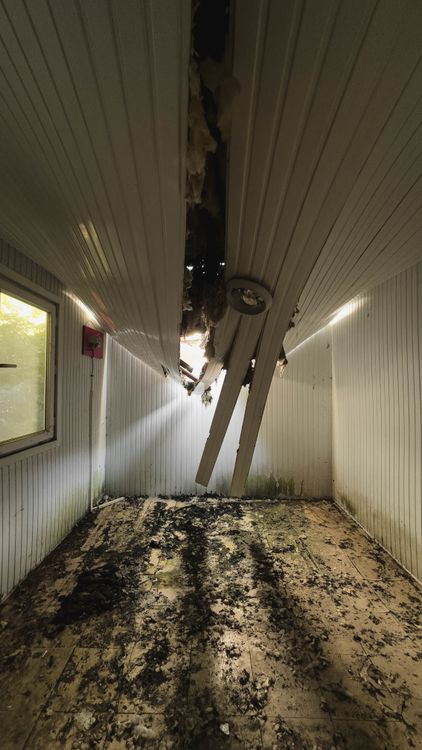
Structural safety deserves the same caution. Saturated drywall loses its strength and can collapse without warning, buckled or lifted flooring hides soft subfloors, and floodwater can undermine exterior grading and foundations. If ceilings are sagging or walls feel soft, stay out of those rooms. The cost of one professional assessment is trivial next to an injury in a building that was not ready for re-entry.
Treat the first visit as a safety sweep, not a cleanup. The walkthrough should answer three questions: is the power safe, is the water contaminated, and is the structure sound. Everything else — inventory, drying, repairs — comes after those answers.
What should you document before touching anything?
Before a single item is moved, photograph everything. Wide shots of every affected room, close-ups of damaged equipment and finishes, water lines on walls and columns, serial numbers and model plates on machinery, the condition of inventory and stock. Then shoot a slow video walkthrough with narration — say the date, the time, and what you are looking at. Timestamped evidence is the backbone of the claim.
Do not throw anything away yet. Ruined carpet, soaked drywall, damaged inventory — the insurer may want to inspect it, and items discarded before documentation become line items the adjuster has never seen. If something is a health hazard and must go, photograph it thoroughly first and keep a written inventory of everything removed, with approximate values.
Save every receipt from this point forward. Pumps, dehumidifiers, contractor call-out fees, temporary storage, hotel rooms for displaced staff — mitigation spending is part of the claim, but only the part you can prove. The records you create in the first 72 hours are what separate a paid claim from a disputed one.
How do you stop the damage from spreading?
Most commercial policies include a duty to mitigate — meaning the insurer expects you to take reasonable steps to limit the loss, and can reduce payment for damage that got worse because nobody acted. Mitigation starts the moment the building is safe to enter.
Get standing water out: pumps for depth, wet vacuums for the rest. Pull up carpet and padding that sat in water, and cut out drywall below the water line — only after you have photographed it. Then get air moving and run dehumidifiers; drying is a process, not an afternoon. Materials that stay wet invite mold, and mold turns a water claim into a much bigger and more complicated problem — so the drying clock starts immediately, not when the adjuster arrives.
If the water came through the roof or the building envelope rather than rising from outside, finding the entry point matters for both the repair and the claim. Our water intrusion guide walks through tracing how water travels through a commercial building, and our flooding overview covers the full response from assessment to repair.
When should you notify your insurer — and what do you say?
Notify your insurer as soon as possible — the same day you discover the flood is the standard to aim for. Have these ready when you call: the date and time the water was discovered, what happened as far as you know, what you have done so far to mitigate, and photos if the carrier accepts uploads at intake. Ask for the claim number, the adjuster's name, and the expected timeline for the first visit — then write all of it down.
One caution: read your policy before assuming what is covered. Many commercial property policies handle flood as a distinct peril, and flood coverage often lives in a separate product with its own deductible and limits. Do not argue coverage on the first call — just report the facts, document the loss, and let the adjuster and your agent sort out which part of your program responds.
And do not sign anything in a hurry. Contractors sometimes present assignment-of-benefits paperwork at the door in the first chaotic days. That paperwork can hand control of your claim to someone else. Read it, sleep on it, and understand it before you sign.
Should you call a contractor before the adjuster arrives?
Yes — for the right things. An emergency mitigation contractor can extract water, set drying equipment, and secure the building against further intrusion. A storm-damage assessment gives you a professional scope of the damage in writing, with photos, which strengthens your position when the adjuster arrives. What you should not do is start permanent repairs — new drywall, new flooring, rebuilt systems — before the adjuster has documented the damage. The rule is simple: stabilize and document now, rebuild after the inspection.
Choose the contractor the way you would choose any high-stakes vendor: written scope, photos, references, no pressure tactics. A vetted storm-damage contractor coordinates with the adjuster instead of racing ahead of them. If you need that assessment, our services cover storm-damage inspection and documentation, and you can contact us to start the process — businesses can also see how the process works for commercial properties on our for businesses page.
How do you keep the business running while the building recovers?
The building is one problem; the business is another, and they need parallel plans. Notify tenants, customers, and key vendors promptly — a short, honest update beats silence, and silence breeds rumors. If part of the building is usable, consolidate operations there; if not, arrange temporary space or remote work before the disruption compounds.
Check whether your program includes business-interruption coverage, which can respond to lost income while the building is unusable — but it typically requires documentation of the income loss, so start tracking it now. Keep a simple log: dates closed or partially operating, orders missed, customers lost, extra expenses incurred. Rebuilding the building is the contractor's job; proving the business impact is yours, and it starts on day one.
Frequently asked questions
Does my commercial property insurance cover flood damage?
It depends on your policy. Many standard commercial property policies treat flood differently from other kinds of water damage, and flood coverage is often a separate product with its own limits. Check your declarations page and call your agent — do not assume you are covered, and do not assume you are not. Either way, document everything exactly the same way.
How long do I have to file a flood damage claim?
Notify your insurer as soon as possible — the same day the flood is discovered is the standard to aim for. Policies set their own deadlines for formal proof-of-loss paperwork, so ask your adjuster for the specific dates that apply to your claim and put them on the calendar. Missing a deadline is one of the easiest ways to lose a valid claim.
Can I start cleanup before the adjuster arrives?
Yes — mitigation is not just allowed, it is expected. Pump out standing water, remove ruined porous materials, and get the space drying. The rule is documentation first: photograph and video everything before you move or discard it, and keep an inventory of anything you throw away. Adjusters routinely work from photos when the cleanup could not wait.
What if the water came from a roof leak instead of rising floodwater?
Then it is a different conversation with your insurer, and tracing the source matters for both the repair and the claim. Water that enters through the roof or building envelope is typically handled under the property policy's water-damage provisions rather than flood provisions. Our flooding guide explains how entry points affect the response, and a professional inspection documents the path the water took.
Should I hire a contractor before the insurance adjuster visits?
Hire one for emergency mitigation and a written assessment — but hold off on permanent repairs until the adjuster has documented the damage. A good storm-damage contractor photographs everything, scopes the work in writing, and coordinates with the adjuster rather than racing ahead of them. Get the assessment; pause the rebuild.
Think your building took a hit?
Get a fast, no-obligation inspection from a local pro.