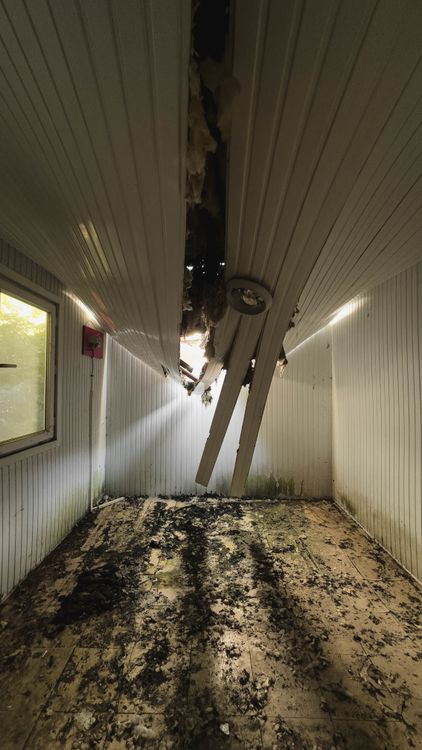

Photo by Vincent Rivaud via Pexels
In short: A commercial roof insurance claim after a storm follows a predictable sequence: notify the insurer promptly, mitigate further damage, document everything, let the adjuster inspect, and settle based on written estimates. The owners who get fair outcomes are the ones who treated the claim like a project — dates on the calendar, photos on file, and every conversation documented. This guide walks through each step so nothing important slips.
When should you notify your insurer?
As soon as you reasonably suspect storm damage — not after you are certain, and not after the repairs are done. Hail, high winds, and falling debris do not always leave damage you can see from the ground, and waiting months to report gives the insurer room to argue that the damage is old, worsened by neglect, or caused by something else entirely. Prompt notice is one of the few parts of a claim entirely in your control.
The first call does not need to be exhaustive. What the insurer needs at intake: the date of the storm, what you observed or suspect, what mitigation steps you have taken, and your contact information. Then ask for three things: the claim number, the adjuster's name, and the deadline for formal proof-of-loss paperwork. Policies set their own timelines for the formal filing — get the actual dates for your policy and put them on the calendar immediately.
A note for properties in multi-tenant buildings: coordinate the claim through the entity that owns the roof. Tenants can report interior leaks, but the roof claim itself belongs to the owner or the HOA/association, depending on your governing documents.
What should you do before the adjuster arrives?
Three jobs, in this order: make the building safe and stop further damage, document the damage, and understand what your policy actually covers.
Mitigation comes first because most commercial policies include a duty to mitigate — the insurer expects reasonable steps to limit the loss. Emergency tarping over an exposed roof section, clearing debris from drains and scuppers, and covering interior openings all count. Keep every receipt: mitigation costs are typically part of the claim, but only the part you can prove. If you need emergency tarping, it is worth knowing what it costs and when you need it before you call around in a panic.
Documentation is the step owners most often underdo. Photograph the roof from every accessible angle before any repairs begin: wide shots showing the full field of the roof, close-ups of damaged areas, penetrations, flashing, and equipment. Shoot a slow video walkthrough with narration and the date. Inside the building, photograph any water stains, drips, or damage to finishes and inventory. If wind damage is involved, photograph missing or displaced material and where it landed — that pattern tells the story of the wind event.
Finally, read your policy before the adjuster arrives. Know your deductible, whether your coverage is actual cash value or replacement cost, any sub-limits or exclusions (some policies carve out cosmetic damage on metal roofs, for example), and whether there are separate wind or hail deductibles. Going into the inspection knowing what your policy promises changes the entire conversation.
How does the adjuster's inspection work?
The adjuster — either a staff adjuster employed by the carrier or an independent adjuster hired for the claim — visits the property to verify the loss and estimate the cost. They will walk the roof, note damage, measure, photograph, and usually sketch the roof layout with damage locations marked. The visit itself is factual; the judgment happens later when they write the estimate.
You do not have to attend alone, and you generally should not. Having your contractor or a knowledgeable representative present means someone technical is there to point out damage the adjuster might walk past — bruised hail damage on a membrane roof, for instance, is invisible from a standing position. Your representative can also take their own photos and notes during the inspection, which become the basis for any supplement if the estimates diverge.
Ask the adjuster before they leave when you can expect the written report, and how to submit additional information. Claims stall most often in the gap between the inspection and the written estimate — a gap that you can shorten by asking for the timeline explicitly and following up in writing.
What is the difference between ACV and replacement cost?
This is the single most important number in your claim, and it is decided by your policy long before any storm arrives. Actual cash value (ACV) pays the depreciated value of the roof at the time of loss — what it was worth, not what it costs to replace. Replacement cost coverage pays for a new roof of like kind and quality, and it usually arrives in two parts: the ACV amount first, then the withheld depreciation ("recoverable depreciation") after you complete the repairs and submit the invoices.
For a roof with significant age, the difference is enormous. A 15-year-old membrane roof under ACV coverage may be depreciated to a fraction of its replacement cost, while the same roof under replacement cost coverage gets you a new roof minus your deductible. Check your declarations page now — before the next storm, not after — so you know which math applies to you.
Be aware that some policies include exclusions that surprise owners after the fact: cosmetic-damage exclusions on metal roofs, limitations on matching materials for partial repairs, or separate higher deductibles for wind and hail perils. These are not bad-faith traps; they are the terms you bought. Knowing them before the adjuster's report arrives keeps the negotiation grounded in the contract.
What happens after the adjuster submits the estimate?
You will receive a written scope and estimate — line items for materials, labor, and overhead, minus your deductible and minus any depreciation the policy withholds. Compare it carefully against your contractor's scope. Discrepancies usually show up in a few predictable places: scope of the repair (patch vs. section vs. full replacement), material matching, labor rates, and whether code-upgrade costs are included.
If the estimate is missing damage your contractor documented, you can file a supplement — a formal request to add the omitted items, with photos and written scope attached. Supplements are a normal part of the process, not an adversarial move; adjusters genuinely miss things, and the supplement process exists because of it. If the two sides cannot agree on the value, most policies include an appraisal clause: each side hires an appraiser, and the two appraisers (plus an umpire if needed) set the loss amount. It is the contract's built-in tiebreaker, and it is worth knowing about before you need it.
One practical rule: do not sign a full settlement release until you are satisfied the scope is right. Once released, the claim is closed, and discovering missed damage afterward becomes a much harder fight.
What if the claim is denied or underpaid?
A denial letter should state the specific policy provision the carrier relied on — read it against your actual policy, not the adjuster's summary of it. Common denial grounds include pre-existing wear, damage below the deductible, and excluded perils. Some of these are legitimate; some are opening positions.
Your response depends on the gap. For a disputed scope or value, start with a supplement or a reinspection request, both supported by your contractor's documentation. For a coverage dispute — the carrier says the policy does not cover what happened — review the language with your agent and, if the money justifies it, an attorney who handles commercial property claims. Public adjusters can also represent you, though they typically work for a percentage of the recovery, so understand the fee before engaging one.
Whatever path you take, keep everything in writing. Phone conversations are where details go to die — follow up every call with a dated email summarizing what was said and agreed. A claim file with a clean paper trail is the asset that makes every escalation path work, from a supplement to an appraisal to, in the worst case, litigation. The owners who treat documentation as part of the job, from the first storm photo to the final invoice, are the ones whose claims get resolved instead of dragging.
If you need a professional assessment of your roof's condition to support a claim — or to document its pre-storm condition before the next one — our storm damage services include written inspections built for exactly this, and you can reach our team here.
Frequently asked questions
How long after a storm do I have to file a commercial roof insurance claim?
Notify your insurer as soon as you discover suspected damage — ideally within days, not weeks. Policies set their own deadlines for formal claim filing and proof-of-loss paperwork, so ask your agent or adjuster for the exact dates and calendar them. Prompt notice protects you from arguments that the damage got worse because nobody called.
Should I get a roof inspection before calling my insurer?
It usually helps. A professional inspection documents the roof's condition with photos and a written scope before the adjuster's visit, which gives you an informed basis for the claim and a reference point if the adjuster's findings differ. Emergency mitigation should never wait for either inspection — stop further intrusion first, then document.
What is the difference between ACV and replacement cost in a roof claim?
Actual cash value (ACV) pays what the roof was worth at the time of loss — replacement cost minus depreciation. Replacement cost coverage pays for a new roof of like kind and quality, often in two payments: the ACV amount first, then the withheld depreciation once repairs are completed and invoiced. Your policy's declarations page states which one you have.
Can my insurer deny the claim if the roof was old?
Age alone is not a reason to deny storm damage — policies cover sudden accidental damage regardless of roof age. But age matters in the settlement math: an older roof has more depreciation applied under ACV coverage, and insurers may scrutinize pre-existing wear to distinguish it from fresh storm damage. Documented maintenance history strengthens your position.
What should I do if the adjuster's offer is too low?
Do not accept a settlement you believe is wrong. Ask for the adjuster's written scope and estimate, then compare it line by line against your contractor's scope. You can submit a supplement with additional documented damage, request a reinspection, or invoke your policy's appraisal clause for an independent valuation. Keep every communication in writing.
Think your building took a hit?
Get a fast, no-obligation inspection from a local pro.