
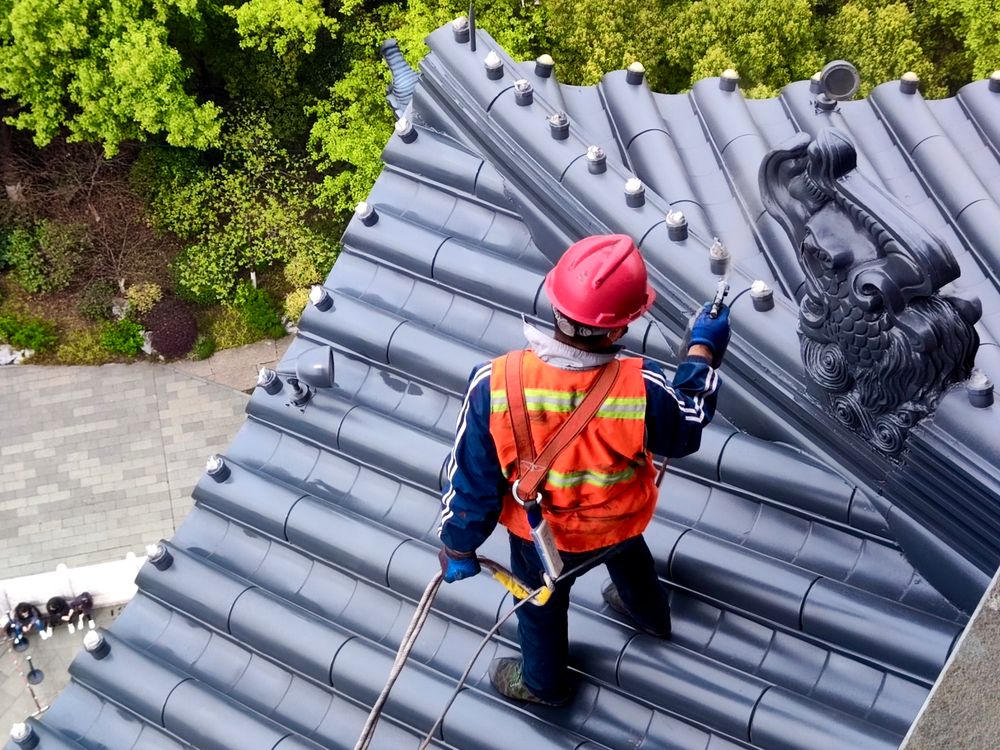
Photo by Ennis Zhu via Pexels
In short: At least twice a year — spring and fall — plus an extra inspection after any severe storm, before the roof's warranty expires, and any time other trades work on the roof. That's the calendar minimum. Storms, roof age, and rooftop traffic decide how often you need to go beyond it.
A commercial roof is one of the few building systems where neglect stays invisible right up until it becomes expensive. A small open seam or a clogged drain doesn't announce itself — it quietly waits for the next rain. Regular inspections are how you find these things on your terms instead of discovering them in a tenant's ceiling. And the schedule doesn't have to be complicated: there's an industry standard, and it's worth following.
What is the standard inspection schedule for a commercial roof?
The National Roofing Contractors Association (NRCA) recommends scheduled roof system inspections at least twice per year, preferably in the spring and fall — a standard confirmed in NRCA's own roofing guidelines. That's the baseline the industry is built around, and it's the schedule most manufacturer warranties and property managers work to.
Twice a year is the minimum, not the ceiling. Think of it as the drumbeat that keeps everything else honest: every other inspection trigger — storms, warranty dates, tenant reports — gets layered on top of it.
Why spring and fall specifically?
Each season's inspection is looking for different damage, and they prepare the roof for what's coming next.
The spring inspection is a damage survey of the winter. Freeze-thaw cycles are brutal on flat and low-slope systems: water gets into tiny openings, freezes, expands, and turns hairline issues into open seams and cracked flashing. Spring is also when you find the damage left by winter storms — displaced flashing, stressed membrane at rooftop equipment curbs, and drains clogged with months of debris. The goal is to fix all of it before the heavy rain and wind season arrives.
The fall inspection is preparation. Drains and scuppers need to be clear before leaf season and winter weather (ponding water is one of the most common preventable failures on flat roofs — see our flooding guide), flashing needs to be tight before freeze-thaw starts again, and any repairs identified earlier in the year should be finished before cold weather makes them harder to do properly.
This is why, right now — mid-October — is the ideal moment for the fall inspection if it hasn't happened yet. You're still in mild weather, and the worst of winter is weeks away.
When should you inspect more often than twice a year?
The twice-yearly schedule assumes an uneventful year. Commercial buildings rarely get one. Add inspections in these situations:
- After severe weather. Per NRCA guidance, additional inspections are suggested after any severe weather event — a hailstorm, hurricane, or high-wind event. Even if the building looks fine from the parking lot, hail can bruise membranes and dent rooftop equipment in ways you can't see from the ground. If a storm was strong enough to move patio furniture or drop branches, the roof deserves a look.
- After other trades work on the roof. HVAC techs, electricians, and solar installers all walk the roof, set down tools, and cut penetrations. NRCA also recommends inspecting before and after any work performed on or adjacent to the roof. Dropped screws, crushed insulation, and new penetrations are a classic source of "mystery" leaks that appear weeks later.
- On older roofs. Once a roof is past its first decade or approaching the end of its expected service life, problems accelerate. Annual is no longer enough — the twice-yearly schedule becomes the true minimum, and some managers add a quick mid-summer check on the oldest systems.
- On roofs with heavy foot traffic. Rooftops that double as service platforms for equipment, or that get regular foot traffic from building staff, wear faster. More traffic means more punctures, more scuffed seams, more displaced walkway pads.
- Before a property sale or purchase. A pre-transaction inspection sets the roof's condition baseline and prevents post-sale disputes — the same logic as documenting damage for an insurance claim.
- Before the warranty expires. A pre-expiration inspection catches defects the warranty should cover while there's still time to file. Don't discover a warrantable defect two months after coverage lapsed.
What should a commercial roof inspection actually cover?
A proper inspection is a systematic walk, not a glance. Whether you hire it out or your maintenance team does the first pass, the checklist covers the same areas:
- The membrane field. Look for punctures, blisters, tears, and areas where the surface looks scuffed or displaced. On single-ply systems, seams are the weak point — check that they're still bonded, especially at perimeters and around equipment.
- Flashing at every penetration and parapet. Flashing is where most leaks start: pulled-away flashing at parapets, gaps around pipes and vents, and cracked sealant at equipment curbs. This is also where hail damage and wind damage most often show up.
- Drains, scuppers, and gutters. Clear them, then confirm water actually moves toward them. Debris-choked drains cause ponding, and ponding stresses seams and can void some membrane warranties. If you're not sure what's normal versus a problem, our guide to flat roof ponding water covers the difference.
- Rooftop equipment and curbs. Check that units haven't shifted on their curbs, that access panels and ductwork are intact, and that condenser fins aren't damaged. Dented equipment often corroborates a hail event — and insurance carriers look for it.
- The interior. Always check inside, too. Water stains on ceilings, damp insulation smell, or mold at wall-roof joints can reveal a breach that the roof surface hides. Tenant reports of leaks should be logged and matched to roof findings.
The inspection should end with a written report and photos — not just a verbal okay. No report, no inspection.
Can a property manager do the inspection, or does it need a pro?
Both, in layers. Property managers should do their own routine checks — walking the grounds after storms, watching for ceiling stains, checking that drains aren't visibly clogged, and photographing anything suspicious. That vigilance between professional visits is genuinely valuable, and it's free.
But the on-roof inspection itself should be done by someone who understands roof systems — a roofing contractor or dedicated roof inspector. Storm damage can leave membranes slippery, punctured, or structurally compromised, and it takes experience to distinguish cosmetic wear from a failing seam. A professional also produces the written, photo-documented report that warranties and insurance claims require; a manager's notebook notes rarely carry the same weight.
If you're not sure what a professional inspection finds versus what you can check yourself, the short version is: your eyes on the ground every month, a pro on the roof twice a year. For suspected damage rather than routine maintenance, see our storm damage inspection overview.
What happens if inspections get skipped?
Three things, in roughly this order:
Small problems become leaks. An open seam is a cheap fix when it's found in October; it's a ceiling replacement, tenant disruption, and emergency service call when it's found in January after a freeze-thaw cycle opened it further. Roofs almost never fail all at once — they fail from accumulated small defects that nobody looked for.
Warranty coverage gets shaky. Most manufacturer warranties expect the owner to maintain the roof. If a defect claim arrives with no inspection history, the manufacturer has an opening to argue neglect. Dated inspection reports close that argument.
Insurance claims get harder. When a storm does cause damage, the claim depends on proving the storm caused it — not pre-existing neglect. Our documentation checklist covers the evidence side, but the underlying principle starts here: regular inspections prove the roof was maintained, so new damage is clearly new.
The cost of an inspection is a rounding error against any one of those three outcomes. That's the whole argument for the schedule.
Putting the schedule on the calendar
Here's the practical version to hand your team:
- March–April: Spring inspection — winter damage survey, prep for rain and storm season.
- October–November: Fall inspection — clear drains, tighten flashing, prep for winter.
- After every severe storm: Additional inspection per NRCA guidance.
- Before and after rooftop work: Verify condition, document changes.
- Before warranty expiration: Catch covered defects in time.
Put the two seasonal inspections on the calendar now, and treat the rest as standing triggers. If you'd like help with the next one, Storm Fix Now connects commercial properties with vetted roof pros for inspection and storm damage assessment — and if you're dealing with suspected damage rather than routine maintenance, reach out and tell us what the building just went through.
Frequently asked questions
Is twice a year really necessary if the roof is new?
Yes — new roofs benefit from the same rhythm, plus one extra inspection in the first year. New roofs can develop problems from installation settling, other trades working on the roof (HVAC, electrical, solar), and punch-list items that only show up after the first full season of weather. Catching those early keeps the manufacturer warranty in good standing, since many warranties expect documented maintenance.
Do I need an inspection after every storm?
Not after every rain shower, but yes after severe weather. The industry standard is an additional inspection after any major storm event — hail, high winds, hurricanes, or anything that dropped debris on the roof or parking lot. If you can see branches, displaced equipment, or lifted flashing from the ground, that is your cue to get the roof checked before the next rain turns a small breach into interior damage.
Does my roof warranty require inspections?
Many manufacturer warranties include maintenance requirements, and most expect the owner to take reasonable care of the system — which documented inspections demonstrate. Read your warranty's terms and conditions for the specifics, and file every inspection report with your warranty documents. When a warranty dispute arises, a folder of dated inspections is the strongest evidence that you upheld your end.
How long does a commercial roof inspection take?
It depends on the roof's size, access, and condition, but a professional walkthrough of a typical single commercial building usually takes one to a few hours. Larger portfolios or roofs with extensive equipment take longer. The visit should end with a written report and photos — if all you get is a verbal thumbs-up, it was not a real inspection.
What records should I keep from each inspection?
Keep the date, the inspector's name and company, photos of the overall roof and any findings, a written list of deficiencies found, and what was done about each one. Store it all with the roof's warranty documents. These records serve three purposes: warranty compliance, insurance claim evidence, and a baseline that makes the next inspection faster and more accurate.
Think your building took a hit?
Get a fast, no-obligation inspection from a local pro.
