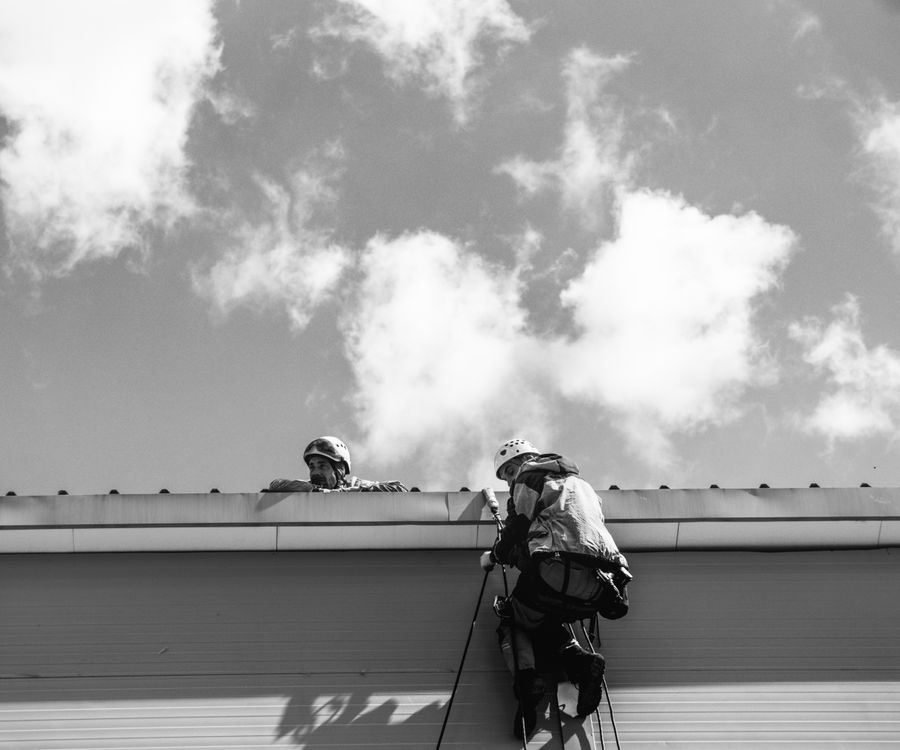

Photo by 芷秦 via Pexels
In short: Wind damage on a commercial roof rarely announces itself. A membrane that billowed for an hour can settle back down and look fine — while its seams are now stressed and its perimeter flashing is loose enough to admit the next rain. The five signs below are what a post-storm inspection actually looks for: lifted membrane, displaced flashing, loose fasteners, debris impact, and new ponding or staining. If you see any of them, get a professional wind damage inspection promptly.
Why is wind damage on a commercial roof so easy to miss?
Hail leaves dents. Wind leaves doubt.
On a commercial building, wind works through uplift — negative pressure that tries to peel the system upward, strongest at perimeters and corners where air accelerates. If the membrane, insulation, or flashing was marginal in one of those zones, a strong gust can loosen the attachment without removing anything visible.
That is why wind damage is often discovered weeks later, when the next rain finds the opening the wind left behind. Nothing looked wrong from the ground — the roof told a different story up close. Understanding wind damage on commercial systems starts with knowing it hides.
What are the 5 signs of wind damage property managers should look for?
1. Lifted, billowed, or creased membrane
On single-ply systems (TPO, EPDM, PVC), wind uplift can partially detach the membrane from its substrate or loosen the seams that join sheets. From below, the membrane may appear to "tent" or wrinkle in runs, especially near edges. Creases radiating from a corner, a section that feels soft or spongy underfoot, or a seam that can be lifted by hand are all signs the attachment has been compromised. Even if the membrane settled back into place after the storm, a lifted seam no longer sheds water the way it was designed to.
2. Displaced or bent flashing and edge metal
Flashing and edge metal — terminations at parapets, curbs, and gravel stops — are typically the first components to move in high winds. Look for metal bent back, pulled from the wall, or missing fasteners. Edge metal anchors the membrane at its most vulnerable points; when it shifts, wind can get underneath the system in the next event.
3. Loose, backed-out, or missing fasteners
On mechanically attached systems, every fastener is a hold-down point. Wind cycling can back screws out, stress plates, or tear the membrane around them. You may see a pattern of raised bumps where fastener plates are pushing up, screws sitting at an angle, or washers that have cracked. A single loose fastener is maintenance; a line of them along a seam or perimeter is a sign the system worked hard in the storm and needs attention before it works loose further.
4. Debris impact, punctures, and displaced rooftop equipment
Wind turns unsecured objects into hazards — branches, signage fragments, and the roof's own vent caps and hatches can blow across the surface. Look for scuffs, cuts, or punctures, crushed insulation underfoot, and equipment shifted on its curb. A unit that moved even an inch can tear its flashing. Re-secure anything loose so the next wind has less to throw around.
5. New ponding, staining, or interior leaks after the storm
Sometimes the sign is not on the roof at all — it is the water stain on a ceiling tile that was not there before, the bucket in the warehouse aisle, or the section of roof that now holds water 48 hours after rain when it used to drain. Wind can displace tapered insulation, damage drains, or open seams that redirect water. If you notice ponding where you did not before, or if tenants report drips after a wind event, treat that as a wind-damage sign until an inspection proves otherwise. For water that is already inside the building, quick action matters — see our guide to flooding first steps for commercial properties.
How soon after a wind event should you arrange an inspection?
As soon as it is safe, and ideally within days — not months. Prompt documentation makes it far easier to connect the condition to the storm event if you file a claim. And a loose flashing or lifted seam that admits a little water today can become saturated insulation or an interior leak after two more rains. A prompt services walk-through also catches displaced edge metal or shifted equipment before the next blow turns it into a hazard.
What should you document during a post-wind check?
Whether the inspection is done by your maintenance team from the ground or by a professional on the roof, good documentation follows the same pattern:
- Date and storm details. Note the storm date, any reported wind gusts for your location, and the direction the weather moved through. This anchors everything else.
- Photographs with context. Wide shots that show where on the roof you are, then close-ups of any lifted seam, bent flashing, loose fastener, or debris mark. Include a photo of the roof drains and the building perimeter.
- A simple roof sketch. Mark where each photo was taken and where you found displaced materials. You do not need architectural precision — you need a map someone else can follow.
- Interior observations. Note any new stains, drips, or damp insulation reported by tenants, with dates. Interior evidence often directs the roof inspection to the right zone.
- What you moved or reset. If you re-secured a hatch or removed debris, note it. An adjuster or contractor needs to know what was changed after the storm.
This is the same discipline insurers expect in hail claims, and it applies just as well here. If you do not have a professional report yet, your dated notes and photos still protect you.
What happens if you find one of these signs?
Do not assume it is cosmetic, and do not assume it is catastrophic. Most wind findings live in the middle: a perimeter section that needs re-attachment, flashing that needs to be re-fastened and resealed, fasteners that need to be replaced, or a puncture that needs a proper patch. These are ordinary commercial roofing repairs when they are caught early.
What matters is having a qualified inspector distinguish between "monitor this" and "repair this now," and between "this is maintenance" and "this is storm damage worth documenting for a claim." That judgment is exactly what a storm-focused inspection is for. If you are not sure what you are looking at, reach out through contact and describe what you found — photos help — and we will tell you whether it warrants a site visit.
Wind does not have to tear a roof off to shorten its life. It only has to loosen the details that keep water out. The managers who catch wind damage early are not the ones with the newest roofs — they are the ones who walked the building after the storm and knew what to look for.
FAQs
What wind speed causes damage to a commercial roof?
There is no single threshold — damage depends on roof age, attachment method, and edge condition. Gusts that move debris or stress older flashing can cause damage well below hurricane strength. Any storm with reported strong gusts, blown debris, or power outages in your area is worth a follow-up check.
Can wind damage a flat commercial roof without removing anything?
Yes. The most common pattern is lifted or loosened membrane, stressed seams, and flashing that pulled just far enough to admit the next rain. The roof can look intact from the ground and still need repair.
How soon after high winds should a commercial roof be inspected?
As soon as it is safe and within a few days. Early inspection documents storm-related changes while they are fresh, distinguishes wind effects from pre-existing wear, and catches small lifts before they become interior leaks.
Should property managers inspect the roof themselves?
A ground-level walk-around for debris, displaced covers, and fresh interior staining is useful. Roof access belongs with a professional — roofs can be slippery and edges may be compromised after wind, and the subtle membrane and seam changes that matter are easy to miss without training.
Does wind damage always mean an insurance claim?
No. Many findings are maintenance-level: re-securing flashing, resealing terminations, replacing a few fasteners. An inspection helps you decide whether the damage is storm-related, whether it threatens the system, and whether the documentation supports a claim.
Frequently asked questions
What wind speed causes damage to a commercial roof?
There is no single threshold — damage depends on roof age, attachment method, and edge condition. Straight-line winds and thunderstorm gusts that rattle loose flashing or debris across the surface can cause damage well below hurricane strength, especially on older or poorly maintained systems. Any storm with reported gusts, blown debris, or power outages in your area is worth a follow-up check.
Can wind damage a flat roof without ripping anything off?
Yes. The most common commercial wind damage is not a missing section — it is lifted or loosened membrane, stressed seams, and flashing that has pulled just far enough to let water in during the next rain. The roof can look intact from the parking lot and still need repair.
How soon after high winds should a commercial roof be inspected?
As soon as it is safe to access and within a few days of the event. Early inspection documents storm-related changes while they are fresh, helps distinguish wind damage from pre-existing wear, and addresses small lifts or openings before wind-driven rain turns them into interior leaks.
Does wind damage always lead to an insurance claim?
No. Many wind findings are maintenance-level repairs — re-securing flashing, resealing terminations, replacing a few fasteners. A professional inspection helps you decide whether the damage is storm-related, whether it threatens the system, and whether documentation supports a claim.
Should a property manager inspect a commercial roof themselves?
A ground-level walk-around to check for debris, displaced covers, and interior staining is useful. Roof access should be left to a professional — commercial roofs can be slippery, edges can be compromised after wind, and an untrained walk can miss the subtle membrane and seam changes that matter most or create new damage.
Think your building took a hit?
Get a fast, no-obligation inspection from a local pro.